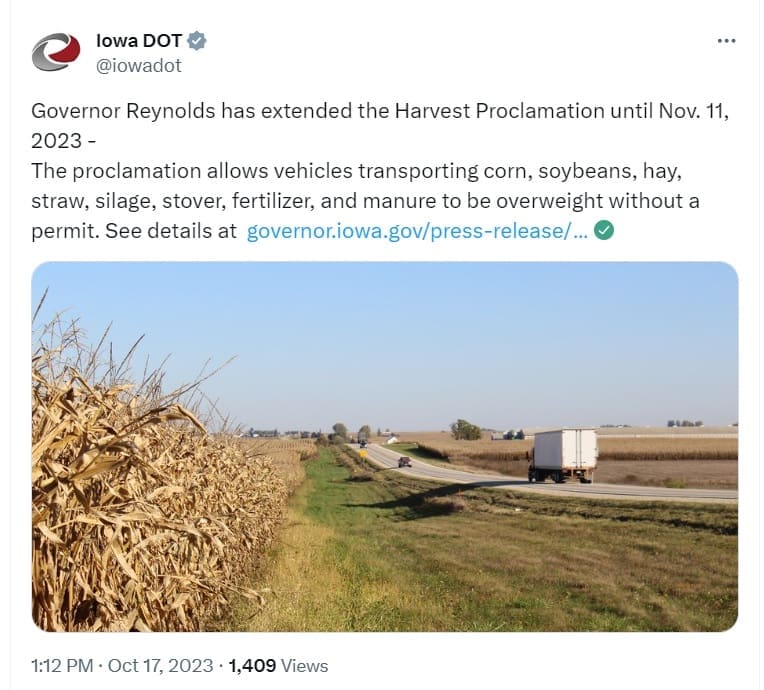
It is valid until November 11 and applies to the state's roads.
Kim Reynolds, the state’s governor, extended Iowa’s overweight load limit until Nov. 11 in an attempt to help grain transportation and general crop transportation. The regulations apply to everyone who moves soybeans, hay, straw, corn, forage, fertilizers, silage and manure.
The exemption allows people to be overweight less than 90 thousand pounds (gross weight). These #trucks can operate without a permit while the regulations are in effect. In this regard, state Secretary of Agriculture Mike Naig stated: “Harvest is in full swing. Warmer temperatures and mostly dry conditions across the state allowed for significant progress in harvest last week.”
In a report, Naig detailed that corn reached maturity 8 days earlier than last year and that the soybean harvest exceeded 50%, which makes it imperative that agricultural transport can transport the grains.

Where can you drive with this excess weight?
Within Iowa highways. Interstates are excluded. Additionally, vehicles operating under the proclamation must comply with posted weight limits on roads and bridges.
“The Iowa Department of Public Safety is hereby directed to monitor the operation of this proclamation to ensure the safety of the public and facilitate the movement of trucks involved in our state’s planting season,” the directive states.
On its social networks, IOWA DOT also asked the general population to be patient with agricultural transportation on the state’s routes. “The fall harvest is in full swing, so if you see one of these on the road, give it plenty of room. The farmer will likely stop and let you pass as soon as possible, but be patient while they work to bring in the crops as food and fuel,” it is detailed.

In Brief: FMCSA CDL Exemption, EPA Emissions Delay, and ELD Revocations
FMCSA and EPA introduce policy shifts for trucking and automotive industries.

Motor Oil Crisis Hits Trucking Industry as Supply Chain Disruptions Deepen
The conflict between the United States and Iran, combined with restrictions in the Strait of Hormuz, is now disrupting global motor oil supplies, driving up prices, reducing availability and creating new operational pressure for fleets and owner-operators across the United States.

4,000 Brake Inspections Led to Commercial Vehicles Being Removed from Service
The CVSA conducted inspections of commercial vehicles across North America as part of Brake Safety Day.

U.S. Bill Seeks to Create Federal Standards for Autonomous Trucks
As part of the BUILD America 250 Act, a comprehensive federal regulatory framework for the deployment of autonomous trucks in the United States has been proposed.

Freight: America’s New Push to Modernize Roads, Ports and Supply Chains
The U.S. Department of Transportation unveiled the 2026 National Freight Strategic Plan, a roadmap to upgrade a nearly seven-million-mile freight network that moves more than 54 million tons of goods every day. The announcement comes amid growing industrial activity, reshoring and mounting pressure on America’s logistics infrastructure.

World Cup 2026: The truckers are well insured and ready to be champions
The championship will turn US highways into a logistical hive of activity. A massive challenge that will require securing every truck and its cargo before the starting whistle. The numbers behind this huge business.