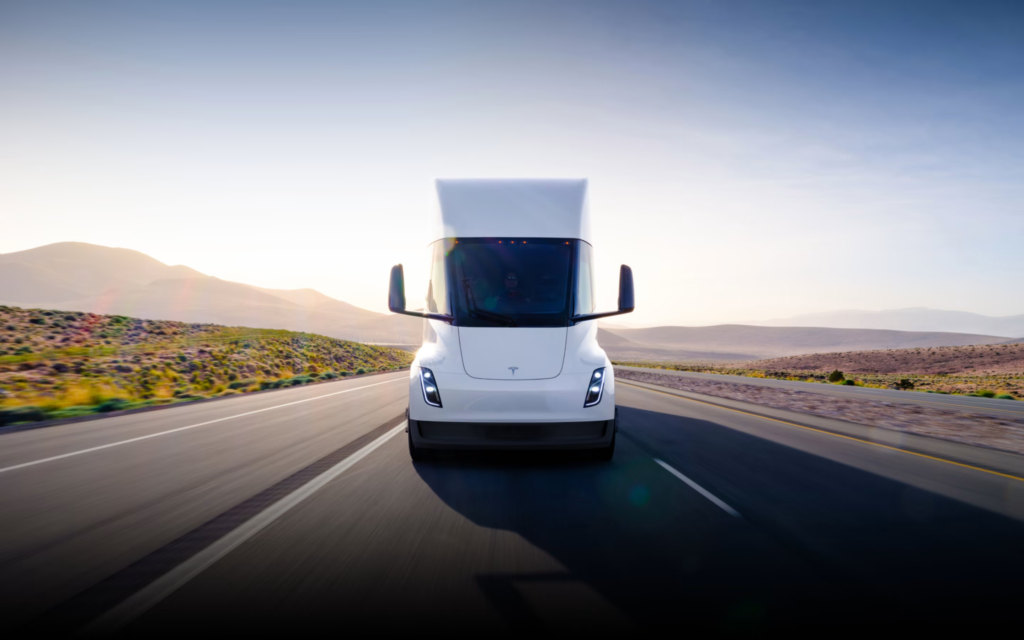
Following the release of Tesla’s third-quarter 2025 financial results, the company confirmed that the Tesla Semi is getting closer to its official debut.
One of the most anticipated launches in the electric transport industry is the Tesla Semi, the fully electric Class 8 truck developed by Tesla. Originally announced in 2017, its debut has faced multiple delays due to various circumstances that have affected the company’s production plans. However, following the release of Tesla’s third-quarter 2025 financial results, the company confirmed that the Tesla Semi is getting closer to its official debut.
Over the past few years, Tesla has built several pilot prototypes, which have undergone rigorous performance testing. A notable example took place last July, when ABF Freight covered 4,494 miles with a Tesla Semi, testing its endurance and performance while crossing the demanding Donner Pass in California.
The results demonstrated the electric truck’s strong potential, and everything points to mass production beginning in 2026, according to Lars Moravy, Tesla’s Vice President of Vehicle Engineering. With this, Elon Musk’s company aims to strengthen its position as a leader in the electrification of heavy-duty freight transport.
Tesla Semi set to hit the market in 2026
According to Moravy, Tesla’s factory progress is on schedule. “We’ve completed the building and are now installing the equipment. Our validation truck fleet is already out on the roads. By the end of this year, we’ll ramp up production, and early next year we’ll begin our first production line, which will peak in the second quarter, with real volume coming in the second half of the year,” he stated.
ABF Freight conducted the pilot program using a battery-electric Tesla Semi over three weeks. The trial included highway and regional routes between Reno and Sacramento, as well as operations in the Bay Area to test rail shuttle performance.
With an average of 321 miles per day and an overall energy efficiency of 1.55 kilowatt-hours (kWh) per mile, the Tesla Semi performed strongly during the routes, including the 2,000-meter climb over Donner Pass, matching the performance of its diesel counterparts, according to ABF Freight.
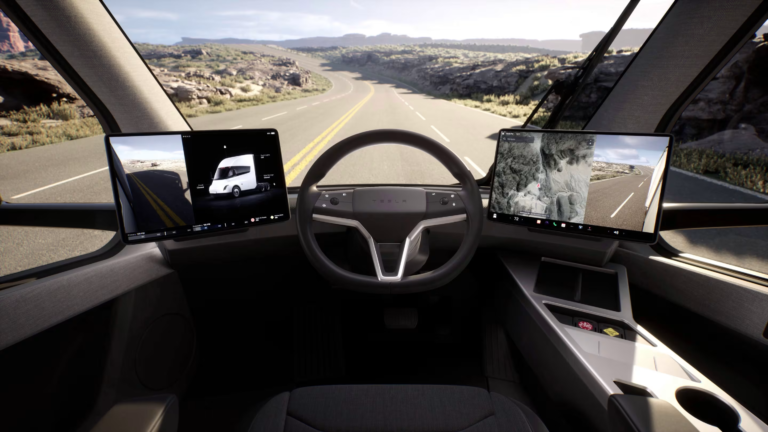
Overall, drivers participating in the pilot program shared positive feedback, highlighting the truck’s comfort, safety, and ease of operation. Features such as the centered driving position, wide visibility, and intuitive controls contributed significantly to an improved driving experience, the company reported.
The Class 8 electric truck is eagerly awaited by various transport companies, many of which are hoping its performance will prove compatible with the durability of traditional diesel trucks.
Tesla Semi: autonomous or human-driven?
While there has been speculation about the Tesla Semi’s self-driving capabilities, Ashok Elluswamy, Tesla’s Vice President of AI/Autopilot Software, stated that the company’s priority is to perfect autonomous capabilities within Tesla’s passenger vehicle lineup, which has not performed at its best in recent months.
According to Elluswamy, Tesla’s autonomous technology must first be refined in compact vehicles before being integrated into the Semi. For now, the electric truck will be driven by human operators with commercial driver’s licenses. The company has not released further details about potential autopilot features for these vehicles.
Truck driver: stop choosing the worst route

Controlling road rage: a guide for truck drivers
The three key steps to help truck drivers control road rage.

New identification process for the Drug and Alcohol Clearinghouse
The FMCSA has begun implementing new identity verification requirements for the Drug and Alcohol Clearinghouse.

OPEC: What the United Arab Emirates Exit Means for U.S. Fuel Costs and Logistics
The departure of the United Arab Emirates from the Organization of the Petroleum Exporting Countries is reshaping the global oil market, introducing price volatility and creating new challenges for diesel costs, freight operations, and fleet planning across the United States.

Trucks only: Georgia plans dedicated commercial vehicle lanes on I-75
The Georgia Department of Transportation has begun developing a project that plans to add commercial vehicle lanes on I-75.

Tesla Semi moves toward scale
Tesla’s electric truck is already on the road—now the real challenge is scaling production for the freight industry

New US transportation map: adapt without wasting time
The U.S. government has implemented sweeping changes to regulations governing freight transportation, affecting everything from who can be behind the wheel to mandatory in-cab technology. This is an effort to strengthen safety and operational transparency.