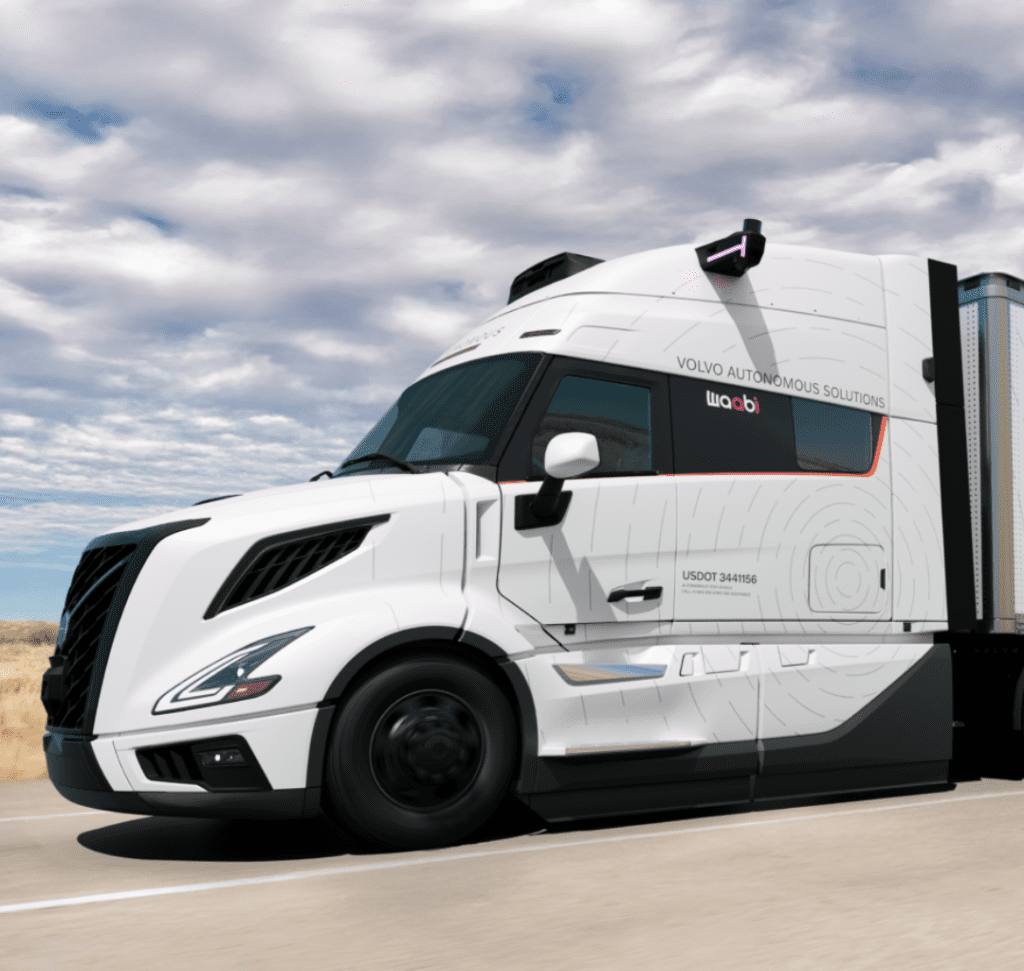
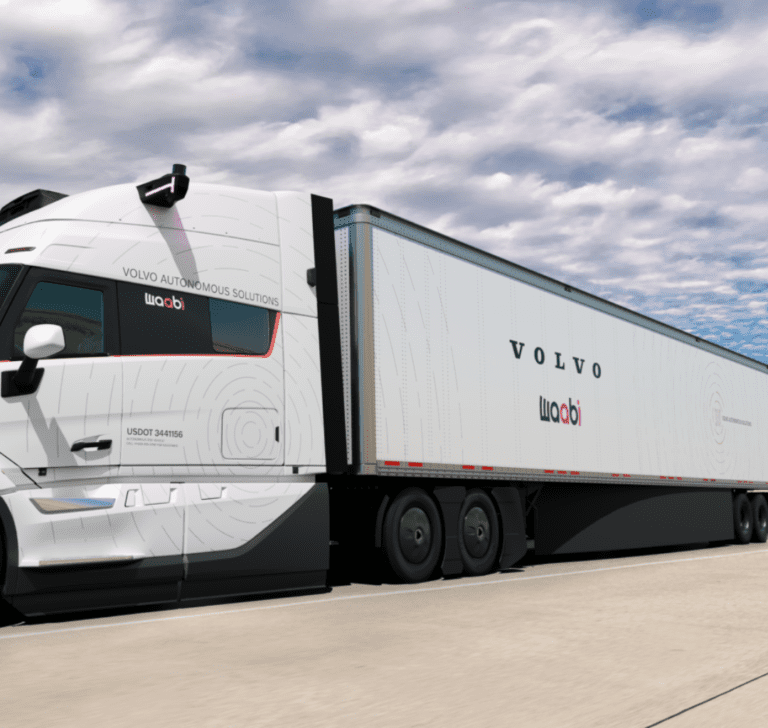
A strategic partnership between Waabi and Volvo Autonomous Solutions has been formalized to deploy the next-generation autonomous trucks.
A strategic partnership between Waabi, a Toronto-based technology company specializing in autonomous trucks, and Volvo Autonomous Solutions has been formalized. The goal of this alliance is the joint development and deployment of next-generation autonomous trucks, focusing on integrating Waabi’s innovations in generative artificial intelligence (AI) with Volvo’s autonomous truck, the Volvo VNL Autonomous.
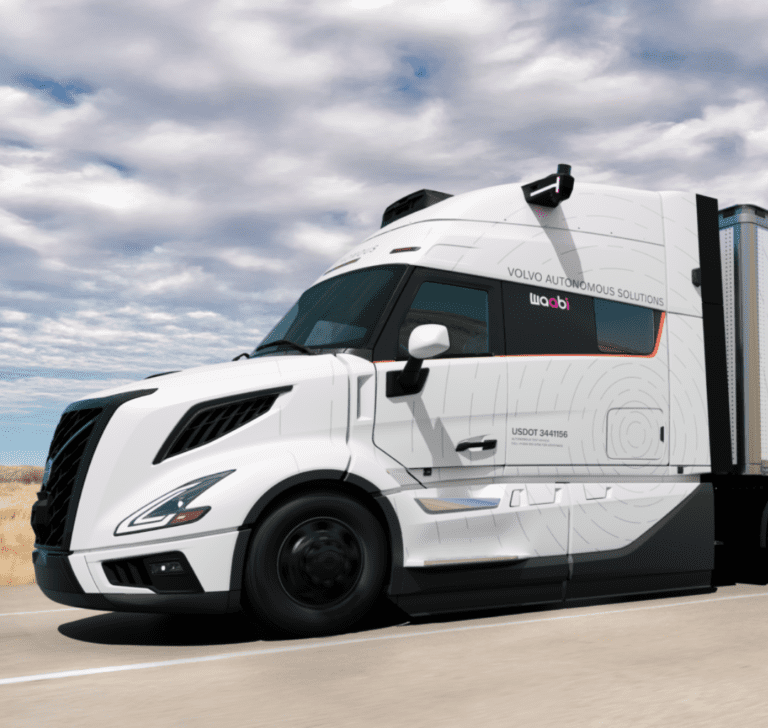
The collaboration is based on a vertical integration, where Waabi’s virtual driver system (Waabi Driver) is directly incorporated into the Volvo VNL Autonomous, which features redundant systems ensuring safe autonomous operations. This partnership means that the trucks will leave the factory fully equipped and ready to operate, as explained by Raquel Urtasun, founder and CEO of Waabi.
“We believe our technology should be vertically integrated into a platform created specifically for autonomous driving,” says Urtasun. In this context, Volvo handles the mechanical aspects of the vehicle, while Waabi continues to develop its Waabi Driver. Part of the evolution of the next generation of autonomous vehicles, known as AV 2.0.

The future of AV 2.0 and its impact on autonomous driving
The evolution of autonomous transportation is marked by the advancement of AV 2.0, a system that represents a significant leap from its predecessor, AV 1.0. While AV 1.0 relied on smaller AI models and human intervention in the development process, AV 2.0 features a single AI system capable of performing all necessary driving tests. Rather than requiring large human teams, AV 2.0 uses models such as Large Language Models (LLM) to design autonomous systems with a high degree of precision.
The computational power behind AV 2.0 is provided by advanced technology such as Nvidia Drive Thor hardware, which powers Waabi Driver. This system is capable of managing the vast amount of data needed to train autonomous vehicles, although Urtasun warns that due to the “black-box” nature of AV 2.0, verifying that systems are functioning correctly is a challenge with considerable economic implications.
Waabi World: a virtual brain for autonomous vehicles
One of Waabi’s key innovations is the development of Waabi Driver, a “brain” for autonomous vehicles. This brain is trained through an advanced simulator called Waabi World, which generates digital twins of the world and performs real-time tests, allowing Waabi Driver to learn to drive autonomously without human intervention. With this high-fidelity simulation, the system can correct errors and improve its performance as it learns from environmental conditions.
An example of Waabi Driver’s effectiveness was demonstrated during a test where the system successfully drove in the rain, a challenge for autonomous vehicles that had not been specifically trained for this scenario.

Looking ahead: tests in 2025 and Volvo’s investment
This move toward autonomous driving is complemented by Volvo’s strategic interest, as the company has invested in Waabi through Volvo Group Venture Capital. The collaboration materializes in the development of Waabi Driver for the Volvo VNL Autonomous, with the first road tests expected to take place in 2025.
By integrating its technology with the Volvo VNL, Waabi is laying the foundation for a new era of autonomous transportation, where generative AI will play a crucial role in the evolution of future commercial vehicles.

$75,000 brokers bond rule now in effect
The FMCSA has the authority to suspend the operating license of transportation brokers whose minimum financial security falls below $75,000 After numerous debates, mixed opinions,

Which Trucking Industry Segment Will Grow the Most in the U.S. and Why
Which trucking industry segment will grow the most in the U.S. and why is a key question for investors, carriers, and logistics operators. A new report from DataNexus Market Research points to tank trucking as the fastest-growing segment, driven by rising demand for chemicals, fuels, and hazardous materials

Dangerous Roads: Massive Indiana Crash Involving More Than 10 Semi Trucks Raises Red Flags
Dangerous winter roads, truck accidents, multi-vehicle pile-ups, and low visibility are back in the spotlight after a major crash in Indiana. A pile-up involving more than 30 vehicles, including at least 10 semi trucks, left several people injured and reignited the debate over how to drive safely on snow- and ice-covered highways.

Jerome Powell under investigation as tensions between Trump and the Fed escalate
The investigation into Powell has raised global concerns over a potential threat to the independence of the U.S. central bank. In the new episode of

Road Alert: 25 States Under Extreme Driving Conditions
Snow, ice, strong winds, and low visibility are keeping major highways under active travel advisories. The alert now affects 25 states and calls for extra caution, especially among truck drivers and freight carriers operating along key corridors.

Human Trafficking: A Nationwide Call to Action on America’s Roads
Human trafficking is the focus of a nationwide awareness week aimed at educating truck drivers, motor carriers, law enforcement, and the public about human trafficking, how to spot the warning signs, and what to do if someone may be in danger.