These grants will support 47 charging stations and related projects in 22 states and Puerto Rico.
The Biden administration will allocate $623 million in grants to boost the construction of a national electric vehicle charging network. Announced on January 11, these grants will support 47 charging stations and related projects in 22 states and Puerto Rico, totaling 7,500 charging ports for electric vehicles.
According to authorities, this investment aims to lead the electric vehicle revolution in the United States, creating jobs in the manufacturing, installation, and maintenance of chargers, while ensuring accessibility, reliability, and convenience for American drivers. This funding will enable the country to lead the transition to electric vehicles.
In 2021, Congress approved $7.5 billion in the infrastructure law to establish a national network of 500,000 publicly available electric vehicle charging stations by 2030. Despite being crucial for reducing gasoline vehicle dependence and combating climate change, progress has been slow.
Since 2021, electric vehicle sales have quadrupled, surpassing one million last year. The number of public charging stations has increased by nearly 70%, reaching 168,426, approximately one-third of the global average. Despite this progress, about two-thirds of the goal, with a six-year deadline, still needs to be achieved.

Widespread charger availability is essential for another goal of the Biden administration: achieving 50% electric vehicle sales of new cars by 2030. “Range anxiety” associated with the lack of charging stations, along with cost, poses a significant obstacle to electric vehicle adoption.
According to a survey conducted in April by the Associated Press-NORC Center for Public Affairs Research and the Energy Policy Institute at the University of Chicago, about 80% of respondents cited the shortage of charging stations as a reason for not opting for an electric vehicle.
The Secretary of Transportation highlighted a significant decrease in electric vehicle prices for consumers and projected that electric vehicles will soon be, on average, more cost-effective than internal combustion engine vehicles. He emphasized a new study indicating that electric vehicles cost only 4% more than gasoline vehicles. Additionally, he stated that electric vehicle sales already constitute 9% of all car sales, a significant increase since Biden took office.

The best roadside attractions for truckers in the U.S.
America’s highways hide unique places that break up the routine, don’t hesitate to check out these roadside attractions along the way. The road is much

The trucker style: comfort, function, and identity
Truckers’ style is much more than workwear; it’s an identity. These are the most commonly worn garments among truckers. Truckers’ style is much more than
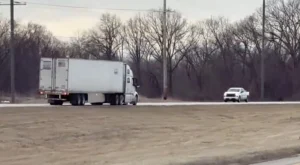
Chaos on Highway 61: Viral Wrong-Way Truck Video Reignites the CDL Debate
An 80-ton tractor-trailer traveling miles in the wrong direction on Missouri’s Highway 61 has reignited a nationwide debate over Commercial Driver’s License (CDL) standards, training
How technology affects driver retention
Friend or foe? 52% of drivers say technology directly influences their decision to stay with or leave a fleet. Fleet telematics company Platform Science published
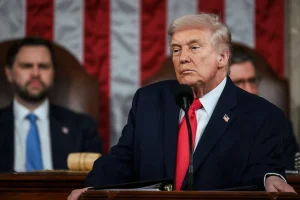
Dalilah Law seeks to remove non-english speaking commercial drivers
President Donald Trump proposed the “Dalilah Law,” an initiative aimed at prohibiting undocumented immigrants from obtaining commercial driver’s licenses. On February 24, President Donald Trump
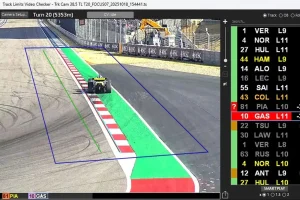
FORMULA 1 and the AI That Could Transform Transportation in the U.S.
The artificial intelligence system that Formula 1 implemented to monitor every car on every turn is opening the door to new applications in trucking, logistics,