At New UPS Warehouse, Robots Will Outnumber People 15 to 1.
UPS Inc. just opened its newest and largest warehouse, UPS Supply Chain Solutions Velocity, a 20-acre facility located outside of Louisville, Kentucky. In addition to the size, there is another peculiarity in this new facility: most of the workers will be robots.
The large parcel corporation plans to fill these new $79 million facilities with more than 3,000 robots by next year. These robots will take care of heavy tasks, reducing the need for labor. This level of automation means that UPS can run the warehouse with only approximately 200 to 500 workers, a figure that is expected to increase over time.
This new facility is a state-of-the-art warehouse and distribution center that uses intelligent automation, machine learning, and artificial intelligence to streamline fulfillment operations. Velocity is one of the largest and most technologically advanced distribution facilities in the package industry.
The president of UPS Supply Chain Solutions, Bill Seward, commented that this is an axis of strategy that has to do with maximizing automated space. “It is important to be able to offer the best cost and the best service to our customers,” added Seward.
Seward added that there is an explanation behind the decision to use robots: they increase the speed and accuracy of order processing, as well as better control inventory and save space by fetching products stacked higher in the building, he says. the president of UPS Supply Solutions. The company has managed to take advantage of the automation boom to increase its share and slow down companies that still manage old facilities with human workers.

More productive than humans?
Kate Gutmann, president of International, Healthcare and Supply Chain Solutions at UPS, mentioned that Velocity is a modernized warehouse with digital systems that manage to optimize and orchestrate order flow and labor management, more efficiently. Adding human workers to these processes, the facility will be able to process more than 350,000 units per day.
According to Seward, robots will help increase worker retention by 30% and reduce work-related injuries by 40%. “They work very efficiently because the automated facilities offer very high service and speed,” she said.
The issue has generated debate around the future of industries and the role of automation in employment. Although these modifications are implemented with the objective of improving production efficiency and preventing possible accidents, the number of individuals who are left without the opportunity to obtain employment increases. UPS did not provide a specific figure for the reduction in employees needed at automated facilities compared to more manual ones, and says warehouse employees will be separate from UPS’s core small package delivery operation and are not part of unions.

Middle East Conflict: Impact on Diesel Prices and What U.S. Truckers Should Expect
The escalation of conflict in the Middle East has pushed crude oil prices toward $80 per barrel, reigniting global energy volatility. For the U.S. trucking
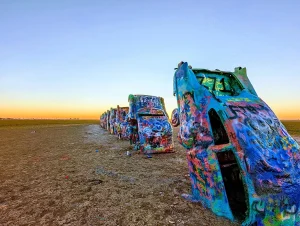
The best roadside attractions for truckers in the U.S.
America’s highways hide unique places that break up the routine, don’t hesitate to check out these roadside attractions along the way. The road is much
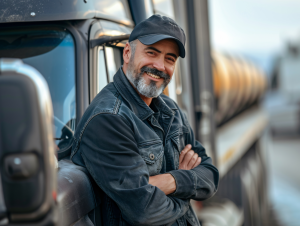
The trucker style: comfort, function, and identity
Truckers’ style is much more than workwear; it’s an identity. These are the most commonly worn garments among truckers. Truckers’ style is much more than
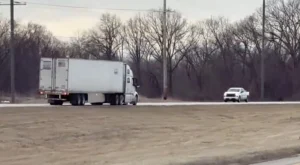
Chaos on Highway 61: Viral Wrong-Way Truck Video Reignites the CDL Debate
An 80-ton tractor-trailer traveling miles in the wrong direction on Missouri’s Highway 61 has reignited a nationwide debate over Commercial Driver’s License (CDL) standards, training
How technology affects driver retention
Friend or foe? 52% of drivers say technology directly influences their decision to stay with or leave a fleet. Fleet telematics company Platform Science published

Dalilah Law seeks to remove non-english speaking commercial drivers
President Donald Trump proposed the “Dalilah Law,” an initiative aimed at prohibiting undocumented immigrants from obtaining commercial driver’s licenses. On February 24, President Donald Trump